
Your Family Deserves the Best Care Book an Appointment
Your skin health matters, so don’t delay. Our clinicians look forward to treating you and your family at one of our local New England practices.
Find Your Nearest APDerm Center
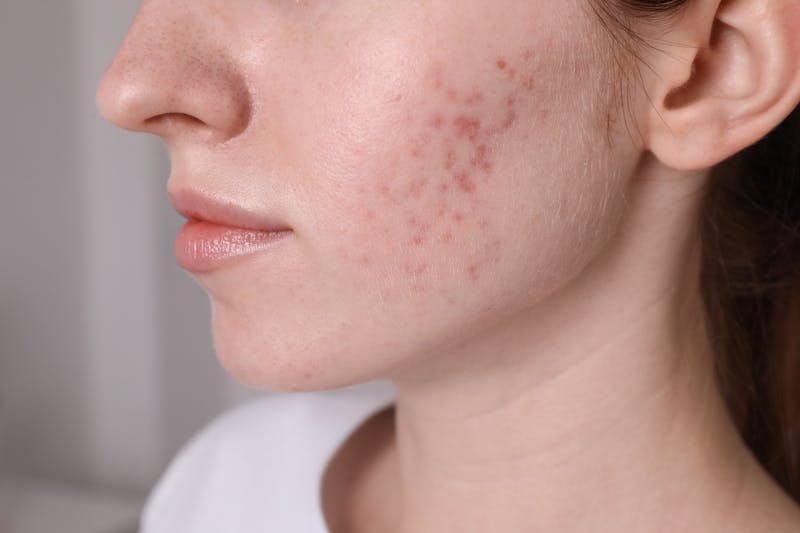
If you've struggled with severe or persistent acne, you've probably heard of Accutane®—the medication known for helping patients achieve dramatic, long-lasting improvements in their skin.
While the original Accutane® brand is no longer available, many people still use the name when referring to isotretinoin, a prescription medication used to treat severe acne.
Below, we've answered some of the most common questions we hear from patients considering isotretinoin treatment.
Isotretinoin is an oral medication used to treat severe acne and acne that has not responded to other treatments.
It works by reducing oil production, decreasing inflammation, helping prevent clogged pores, and reducing acne-causing bacteria. For many patients, it can lead to significant clearing of the skin and long-term improvement.
Isotretinoin may be recommended for patients who have:
A dermatologist can determine whether isotretinoin is appropriate based on your medical history, acne severity, and treatment goals.
Most patients take isotretinoin for approximately 4 to 6 months, though treatment length can vary depending on dosage and individual response.
Your provider will monitor your progress throughout treatment and adjust your plan as needed.
Many patients begin noticing improvement within the first few months of treatment.
It's important to know that some patients experience an initial acne flare before their skin begins to clear. This is a normal part of the process for some individuals and doesn't necessarily mean the medication isn't working.
Yes—dryness is one of the most common side effects.
Patients frequently experience:
Using gentle skincare products, moisturizers, and lip balm can help manage these symptoms throughout treatment.
Yes!
Certain cosmetic treatments need to be postponed while taking isotretinoin and for a period afterward.
Because isotretinoin can affect skin healing, it's important to discuss any planned procedures—including laser treatments, chemical peels, or other resurfacing treatments—with your provider before scheduling them. Some other services, such as waxing, are also not recommended during treatment.
Many patients experience long-lasting improvement after completing a course of isotretinoin.
Some patients remain clear for years, while others may develop occasional breakouts or require additional treatment in the future. Every patient's experience is different.
Isotretinoin is highly regulated because it can cause severe birth defects if taken during pregnancy.
Patients who can become pregnant must participate in the iPLEDGE® program and follow specific requirements throughout treatment, including regular pregnancy testing.
Your dermatology team will walk you through every step of the process and answer any questions you may have.
Like any prescription medication, isotretinoin has potential risks and side effects.
That's why patients are closely monitored throughout treatment with regular follow-up visits and, in some cases, laboratory testing. When prescribed and monitored appropriately, isotretinoin has helped millions of patients safely and successfully treat severe acne.
For patients struggling with severe, scarring, or treatment-resistant acne, isotretinoin remains one of the most effective acne treatments available.
If you've tried multiple treatments without success, a consultation with a dermatology provider can help determine whether isotretinoin may be the right next step on your journey to clearer skin.
Interested in learning more about isotretinoin treatment? Schedule an appointment with one of our dermatology providers to discuss your options and build a personalized acne treatment plan.

Your skin health matters, so don’t delay. Our clinicians look forward to treating you and your family at one of our local New England practices.
Find Your Nearest APDerm Center