
Your Family Deserves the Best Care Book an Appointment
Your skin health matters, so don’t delay. Our clinicians look forward to treating you and your family at one of our local New England practices.
Find Your Nearest APDerm Center
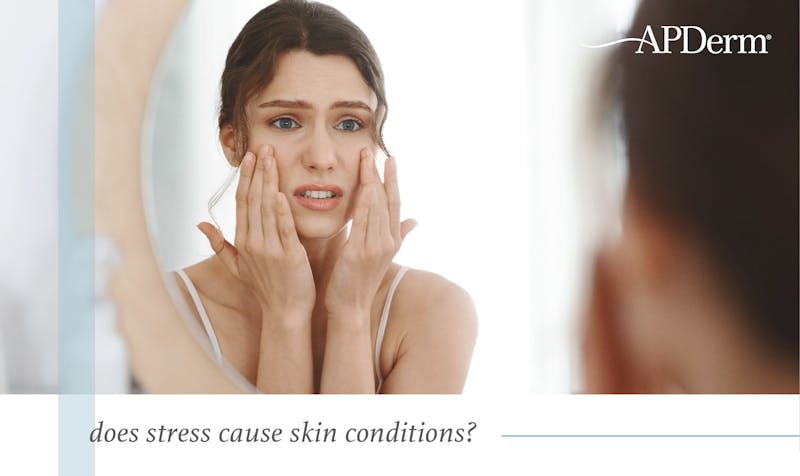
April is Stress Awareness Month, and while most people think of stress as something that affects mood or sleep, it can also have a major impact on your skin, hair, and nails.
If you have ever noticed that your eczema flares before a big event, your acne worsens during a stressful week, or you begin shedding more hair after a difficult period, you are not imagining it. Stress can trigger inflammation throughout the body—and your skin often shows the effects first.
When you are stressed, your body releases hormones such as cortisol and adrenaline. Increased cortisol can:
For many people, stress creates a cycle: stress worsens the skin condition, then the visible skin condition causes even more stress.
Stress is one of the most common triggers for eczema flare-ups. During times of stress, people with eczema may notice:
Stress can also interfere with sleep, which often makes eczema even worse.
If your eczema seems to flare during busy or emotional periods, it may help to identify patterns and work with a dermatologist on a treatment plan that controls inflammation before it spirals.
Stress does not directly “cause” acne, but it can make existing acne significantly worse. Higher cortisol levels can increase oil production and inflammation, which may lead to:
Many patients notice worsening acne around exams, work deadlines, travel, or major life changes.
If over-the-counter products are no longer helping, a dermatologist can recommend prescription treatments, medical-grade skincare, or treatment for acne scarring and discoloration.
Stress can also trigger flare-ups of:
People with psoriasis often notice plaques become more inflamed during stressful periods. Rosacea can worsen with facial flushing and increased sensitivity.
Stress can sometimes lead to a type of temporary hair shedding called telogen effluvium. This usually appears 2–3 months after a major stressor, illness, weight change, or emotional event.
You may notice:
The good news is that stress-related hair loss is often temporary, but it is important to rule out other causes such as thyroid issues, iron deficiency, or other forms of hair loss.
You do not have to “just live with it” if stress is affecting your skin or hair. A dermatologist can help determine what is actually happening and create a personalized plan.
You should schedule an appointment if:
At APDerm, our board-certified dermatologists treat eczema, acne, psoriasis, hair loss, and other skin concerns every day. We can help you get your skin back under control—even during stressful times.
Your skin health matters, so don’t delay. Our clinicians look forward to treating you and your family at one of our local New England practices.
Find Your Nearest APDerm Center