
Your Family Deserves the Best Care Book an Appointment
Your skin health matters, so don’t delay. Our clinicians look forward to treating you and your family at one of our local New England practices.
Find Your Nearest APDerm Center
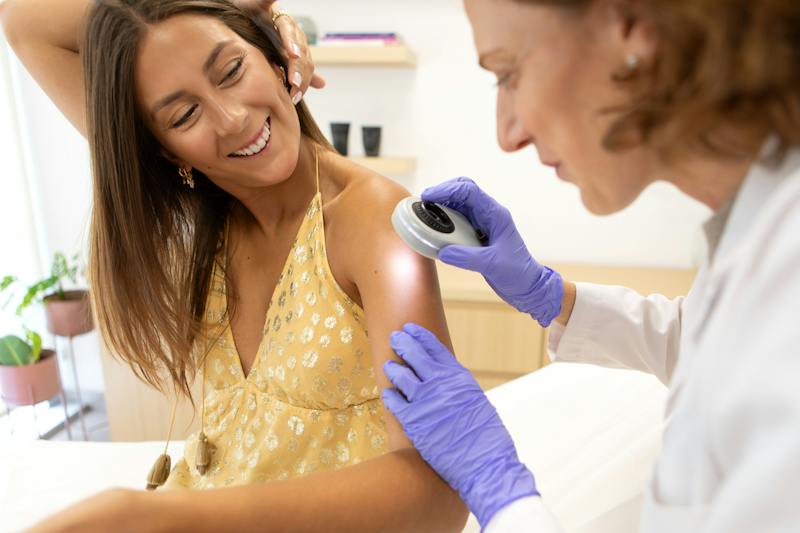
Summer winds down, the beach bag gets put away, and for a lot of people, sun protection quietly goes with it. But skin cancer doesn't work on a seasonal schedule. The UV exposure from a summer of Cape trips, boat days, and backyard barbecues can leave behind cumulative skin damage, and it doesn't show up all at once. Fall can be a smart time to get a full skin check, when you're more likely to notice new or changing spots after a summer of sun exposure. Here's why our dermatology team sees fall as a good checkpoint, not just an autumn errand.
Tan lines are still fresh, which makes it easier to spot new or changing marks. A spot that blended into a suntan in July can look very different against paler, post-summer skin in October. Fall is also before the holiday season gets busy, so it's a natural window to get ahead of a screening before schedules fill up with travel and family commitments.
Not usually. The effects of UV exposure can accumulate over time. While a sunburn may fade within days, the underlying cellular damage contributes to long-term skin changes and skin cancer risk. That's part of what makes it easy to underestimate, the sunburn from a July boat trip fades in a few days, but the effects underneath don't disappear with it.
Yes. Skin cancer is the most common cancer in the United States, and roughly 1 in 5 Americans will develop it in their lifetime. Basal cell carcinoma and squamous cell carcinoma are the most common types of skin cancer and are highly treatable when detected early. Melanoma is less common but more serious, and it also tends to respond best to treatment when caught before it spreads. Early detection can make a significant difference in treatment and outcomes.
A dermatologist performs a visual, head-to-toe exam, checking both sun-exposed areas and easy-to-miss spots like the scalp, between the toes, underarms, and soles of the feet. A skin check is typically a quick, noninvasive exam, although appointments may take longer when there are areas of concern. No bloodwork or invasive procedures are involved upfront. If something looks concerning, your dermatologist may photograph it to track changes over time, recommend a biopsy for a definitive answer, or lay out a follow-up plan.
Use the ABCDE rule: Asymmetry, irregular Borders, multiple Colors, a Diameter larger than a pencil eraser, or a spot that's Evolving in size, shape, or color. It's worth doing a self-exam a week or two before your appointment, checking the spots you can see easily as well as harder-to-view areas like your back, scalp, and the back of your ears, ideally with help from a mirror or a family member. Note anything new, changing, itching, or bleeding so you remember to bring it up.
Anyone who spent significant time outdoors this summer, has fair skin, has a personal or family history of skin cancer, or has had blistering sunburns in the past should treat a fall screening as a priority. People who've had skin cancer before are also at higher risk for developing a new one, which is why regular screenings matter even after a spot has been treated. If you work outdoors or spend significant time on the water, talk with your dermatologist about how often you should have your skin checked.
APDerm recommends annual skin checks, while patients with a history of skin cancer or other risk factors may benefit from more frequent exams based on their dermatologist's recommendations. Fall is a practical anchor point for that annual visit, since it lines up naturally with the end of peak sun season.
Don't wait for a scheduled annual visit. If you've noticed a mole or spot that's new, changing, asymmetric, oddly colored, or irregularly shaped, or if it's itching, crusting, or bleeding, that's worth a call to your dermatologist regardless of the time of year. Early detection is always the goal, and a spot that seems minor is often easier and faster to address the sooner it's evaluated.
A fall skin check is a simple step you can take for your long-term skin health. Whether it's your annual screening or your first, our dermatologists provide thorough, head-to-toe exams and can walk you through next steps if anything needs a closer look. Schedule a skin cancer screening at an APDerm location near you before the season gets away from you.
Your skin health matters, so don’t delay. Our clinicians look forward to treating you and your family at one of our local New England practices.
Find Your Nearest APDerm Center