
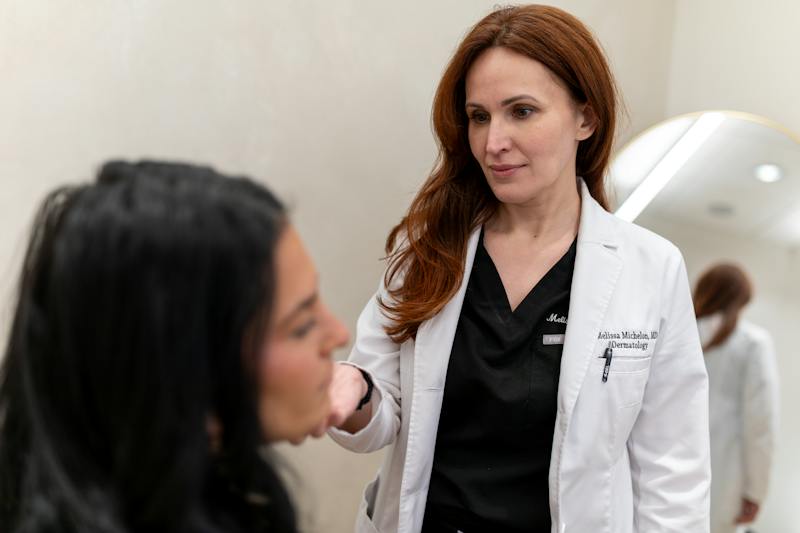
A stubborn skin problem needs a dermatologist when drugstore products haven't helped after several weeks of steady use, or when the problem hurts, scars, keeps coming back, or involves a new or changing spot. Some signs shouldn't wait: a fever with a rash that looks infected needs immediate medical care, and a mole that is changing, itching, or bleeding should be checked by a board-certified dermatologist. Over-the-counter (OTC) products are a reasonable first step for many mild concerns. When they stall, knowing when to see a dermatologist helps you get to the real cause faster.
You're far from alone. About 1 in 4 Americans, nearly 85 million people, saw a physician for at least one skin disease in 2013, according to the Burden of Skin Disease study in the Journal of the American Academy of Dermatology. If you're unsure whether your skin needs professional care, a board-certified dermatologist is the right person to ask. The APDerm network of dermatology practices offers medical, cosmetic, and surgical dermatology for adults and children across New England, with appointments within 30 days.
How long should you try drugstore products before seeing a dermatologist?
Give a drugstore product about 4 to 6 weeks of consistent use before judging it. The American Academy of Dermatology (AAD) says a working acne treatment should show some improvement in that window, though full clearing can take 2 to 3 months or longer. If you see no change after several weeks, a dermatologist visit makes sense.
- Acne: Expect early improvement within 4 to 6 weeks, according to the AAD's guidance on acne that won't clear. For adult acne, the AAD advises making an appointment if your skin isn't clear within a few months.
- Eczema and other rashes: Mayo Clinic recommends seeing a doctor if symptoms continue even after you've tried self-care steps.
- Stay consistent: Stick with one routine long enough to tell whether it's working before adding or swapping products.
- Don't wait out the clock if you notice any of the warning signs in the next section.
Which skin symptoms mean you should see a dermatologist right away?
See a dermatologist promptly if a skin problem is painful, leaves scars, shows signs of infection, disrupts your sleep or daily life, or involves a mole or spot that is new, changing, itching, or bleeding. A fever with a rash that looks infected is different: it needs immediate medical care, not a routine appointment.
- Deep, painful pimples or acne that scars when it clears. The AAD says these call for a dermatologist.
- Dark spots left behind after acne clears, which the AAD also lists as a reason to book a visit.
- Signs of skin infection, such as new streaks, pus, or yellow scabs, per Mayo Clinic.
- Itching or discomfort that affects sleep or daily activities, or skin that is painful.
- A new spot, a spot that looks different from your others, or one that is changing, itching, or bleeding. The AAD recommends seeing a board-certified dermatologist for any of these.
Know the ABCDEs of melanoma
Dermatologists use the ABCDEs to flag moles worth a closer look: Asymmetry, Border, Color, Diameter, and Evolving (changing). Catching melanoma early matters. The National Cancer Institute's SEER program reports a 100% five-year relative survival rate for melanoma diagnosed while still localized (2016–2022 data). Learn more about mole evaluation and skin cancer care at APDerm.
What are the signs by condition?
The signs that a skin condition needs a dermatologist vary, but the pattern is consistent: if drugstore care isn't helping, the problem keeps returning, or it causes pain, scarring, or worry, book a visit. The table below shows when self-care is a reasonable first step and when it's time to see a board-certified dermatologist.
| Condition | Try OTC first? | See a dermatologist if… |
|---|---|---|
| Acne | Yes, for mild breakouts | No improvement after 4–6 weeks; adult acne not clear within a few months; deep, painful pimples; scarring or dark spots after clearing |
| Eczema / dermatitis | Yes, with gentle self-care | Symptoms continue after self-care; itching affects sleep or daily life; skin is painful; signs of infection |
| Rashes / hives | Sometimes | Rash doesn't improve with self-care, is painful, or shows signs of infection. A fever with a rash that looks infected needs immediate care. |
| Moles / new spots | No | Any new spot, a spot that looks different from others, or one that is changing, itching, or bleeding |
| Rosacea | Ask a dermatologist | Facial redness or bumps keep returning or don't respond to your current routine |
| Psoriasis | Ask a dermatologist | Patches persist, spread, or affect comfort and daily life |
| Warts | Sometimes | Warts don't go away with self-care, keep coming back, or appear in sensitive areas |
These conditions are common. Acne affects up to 50 million Americans each year, and about 85% of people ages 12 to 24 have at least minor acne. Atopic dermatitis (the most common type of eczema) affects nearly 1 in 10 Americans, and psoriasis affects nearly 7.5 million people in the U.S., according to the AAD.
What can a dermatologist do that drugstore products can't?
A board-certified dermatologist can diagnose what is actually causing your skin problem, then match it with options you can't buy off the shelf, such as prescription medications and in-office treatments. That matters because the right treatment starts with the right diagnosis, and a stubborn skin problem isn't always what it looks like at first.
Depending on your diagnosis, care within the APDerm network may include:
- Precise diagnosis backed by APDerm's own pathology laboratory when a skin sample needs to be examined.
- Prescription acne treatment, including isotretinoin for patients who qualify.
- Allergy patch testing to help identify triggers behind contact dermatitis.
- Light-based treatments such as phototherapy and XTRAC for certain skin conditions.
- Skin cancer treatment, including Mohs surgery.
- Treatment for acne scarring once breakouts are under control.
Many treatments work gradually and may involve follow-up visits, and your dermatologist will explain what to expect for your skin.
Who should skip self-treatment and book a visit first?
Some people should see a dermatologist before trying drugstore treatments. That includes anyone who is pregnant or trying to become pregnant, parents of children with skin concerns, people who notice dark marks after breakouts, and anyone with a new or changing mole. A dermatologist can recommend options that are safe and suited to your situation.
- Pregnant or trying to conceive: The AAD recommends talking with a dermatologist before treating acne on your own.
- Children and teens: APDerm's pediatric dermatology care uses a gentle approach designed to keep kids comfortable and parents reassured.
- Dark marks after acne: Spots left behind after breakouts are a reason to see a dermatologist. APDerm also treats skin of color concerns.
- New or changing moles: Don't try to treat or remove a suspicious spot at home. Have it checked first.
What to expect at your first dermatology appointment
At your first dermatology appointment, expect your provider to ask about your symptoms, health history, and the products you've already tried, then examine your skin. From there, your dermatologist explains what is likely going on and recommends next steps, which may include a prescription, a procedure, a test, or a follow-up visit.
- Bring your product list (or photos of the labels), plus how long you used each one.
- Take photos of flare-ups if your skin changes from day to day.
- Share your medications and let your provider know if you're pregnant or planning to be.
- Fill out new patient forms ahead of time to save time at check-in.
- Prefer to start remotely? Ask whether a teledermatology visit is a good fit for your concern.
How to book with an APDerm dermatologist near you
If drugstore products haven't helped, talk with a board-certified dermatologist who can confirm what's going on and tailor a plan to your skin. APDerm offers appointments within 30 days and accepts most insurance plans, with practices in Massachusetts, Boston, New Hampshire, and Rhode Island. Find your nearest location and schedule a consultation today.
Find an APDerm Location & Schedule
Frequently Asked Questions
Can a dermatologist prescribe something stronger than what I can buy at the drugstore?
Yes. A board-certified dermatologist can prescribe medications that are not sold over the counter and can offer in-office treatments when your condition calls for them. The right option depends on your diagnosis, skin type, and health history, so your dermatologist will review what you have already tried before recommending a plan.
Should I stop my drugstore products before my dermatology appointment?
Ask the office before you stop or change anything. Keep a list or take photos of every product you have used, including how long you used each one and how your skin responded. That record helps your dermatologist see what has already been tried and choose a smarter next step for your skin.
Is it worth seeing a dermatologist for mild acne that won't go away?
Yes, mild acne that will not clear is a good reason to see a dermatologist. The American Academy of Dermatology says a working treatment should show some improvement in 4 to 6 weeks and advises adults whose acne is not clear within a few months to make an appointment. You do not need severe acne to benefit.
Can I start with a virtual dermatology visit?
Yes, APDerm offers teledermatology, which lets you connect with a dermatology provider remotely. A virtual visit can be a convenient first step when you are not sure whether your skin needs in-person care. If your provider needs a closer look, such as for a changing mole, they will help you schedule an in-office exam.
How often should adults get a skin check?
How often you need a professional skin check depends on your personal risk, so ask your dermatologist for a schedule that fits you. Between visits, watch for any new spot, a spot that looks different from the others, or one that is changing, itching, or bleeding, and book an appointment if you notice one.
Do I need a referral to see a dermatologist at APDerm?
Whether you need a referral depends on your insurance plan. APDerm accepts most insurance plans, and some plans ask for a referral from a primary care provider before a specialist visit. Check your plan's rules, then confirm the details with your nearest APDerm location when you call or schedule your appointment online.